ILKE Foundation publishes the report on "The Outlook of Palestine: Palestinian Society in Data"
Data is the key to analyzing Palestinian society
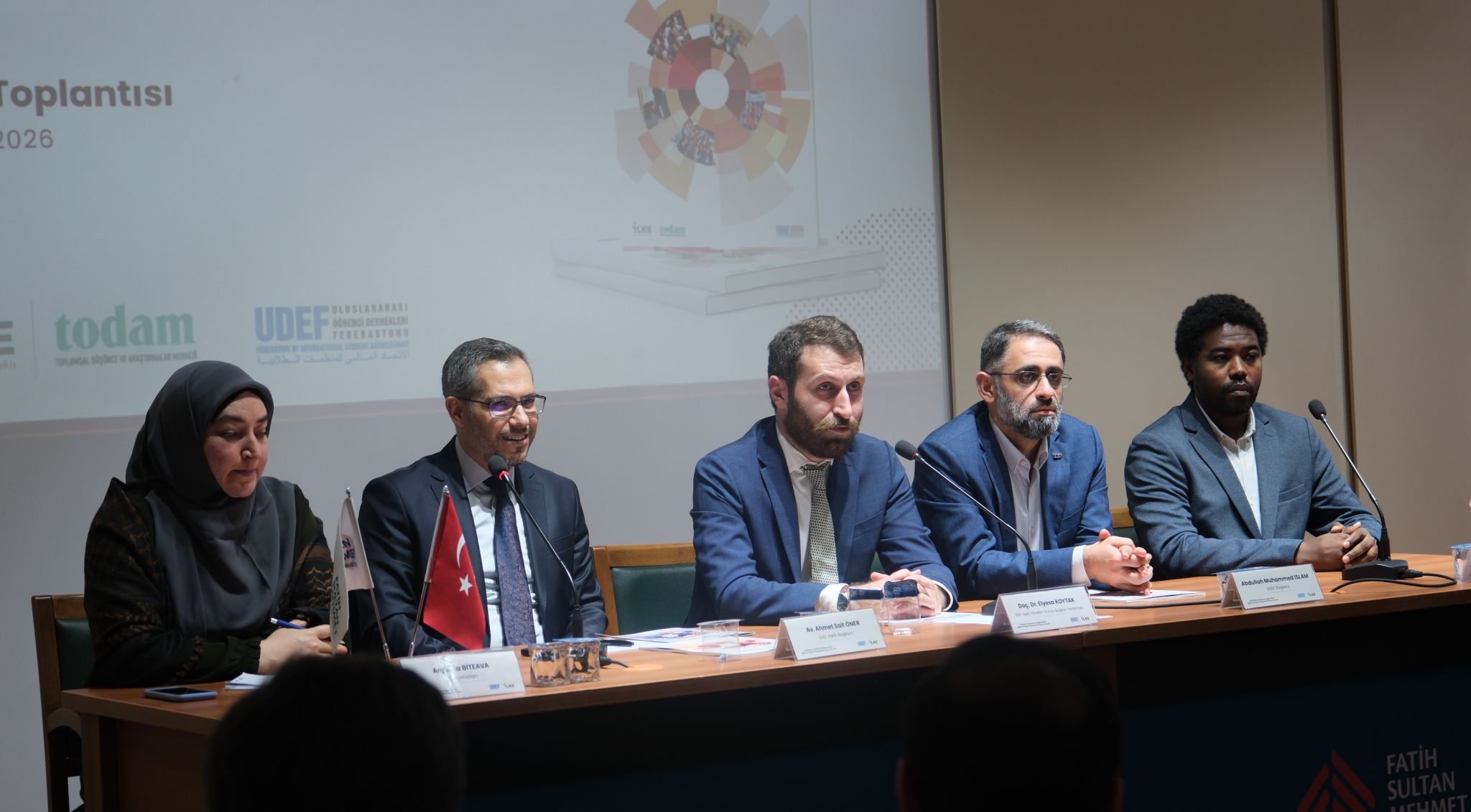
On the anniversary of the October 7 events, the "The Outlook of Palestine: Palestinian Society in Data" report, authored by ILKE Foundation researcher Şüheda Nur Uzuntaş, has been published. The report aims to explore the socio-economic impacts of the restrictions imposed on Palestine under the shadow of the Israeli occupation and to shed light on the societal struggle of the Palestinian people.
The report provides an in-depth analysis of the impact of the Israeli occupation on Palestinian society, with a particular focus on the past and present. It employs a data-driven approach to present a comprehensive and objective assessment of the impact of the occupation on Palestinian society. The report includes expert opinions from Dr. Ola Awad, President of the Palestinian Central Bureau of Statistics (PCBS), humanitarian expert Dr. Ghassan Elkahlout, and Palestinian academic Prof. Dr. Sari Hanafi.
How Israel Dominates Social, Cultural, and Economic Spheres in Palestine
Uzuntaş indicates that the examination of the Israeli occupation, which has persisted since 1948, will encompass a range of topics, including the extent of land taken from Palestinians, the number of trees destroyed by the occupation forces, the challenges Palestinians face in accessing food and healthcare due to the blockade, and settler violence. Furthermore, we examine how the occupation, initiated under a settlement plan, has been meticulously strategised by Israel. The discussion will focus on the multifaceted pressures exerted on the Palestinian populace as a result of these Israeli strategies.
A Young and Growing Population
The report highlights that early marriages are common in Palestinian society, and fertility rates remain high. Since 2000, the total population of Palestine has increased by 83%, with an increase of 73.6% in the West Bank and 100% in the Gaza Strip. According to the report, although the crude birth rate in Palestine showed a declining trend from 2010 to 2023, it remains above the global average. In 2023, the crude birth rate was 28.1 births per 1,000 people in the West Bank and 32 in Gaza.
The demographic balance is a significant issue reflecting the quantitative aspect of the Palestine-Israel conflict.
One in Two People in Gaza is a Child
Mid-year data for 2023 shows the estimated population under 18 in Palestine is 2.4 million, with 1,067,986 in the Gaza Strip. The report states that children make up 43% of the total population of Palestine, with the child population ratio being 41% in the West Bank and 47% in Gaza. This means that one in two people in Gaza is a child. Additionally, the report notes that 66% of the Palestinian population is under the age of 30, with critical demographic indicators such as median and average age hovering around 20 years.
Gaza: One of the Most Densely Populated Areas in the World
The report indicates that the restrictions imposed by Israel on the Palestinian population have resulted in a significant concentration of people in Gaza. Gaza, with an area of only 365 km², has had a population density that has exceeded the averages of Arab and European Union countries for a considerable period of time. This phenomenon is primarily the result of the resettlement of Palestinian refugees displaced in 1948 in Gaza's refugee camps.
Palestinians Do Not Leave Their Land Unless Forced
The report also examines the structure of the Palestinian diaspora, noting that the majority of Palestinians living abroad reside in Arab countries. Just 7.5% of the 14.8 million-strong Palestinian population resides in countries outside the Arab world. A review of the migration patterns of the Palestinian diaspora reveals that the majority of migrant Palestinians are either individuals displaced in 1948 or refugees forcibly displaced to Jordan. Researcher Şüheda Nur Uzuntaş makes the following point: It is a well-known fact that Palestinians have a strong attachment to their land and will not leave it unless forced to do so.
Palestinians Experience Increasing Restrictions on Living Spaces and Freedom of Movement
Due to Israel’s blockade, Gaza has been referred to as an open-air prison. The report also highlights that the Separation Wall in the West Bank acts as a blockade, with permanent checkpoints making it difficult for Palestinians to move even within the West Bank. Approximately 40% of the West Bank is either highly restricted or effectively closed to Palestinian access.
The Occupation Targets Not Only Palestinian Land but Every Aspect of Society
The report states that Israel’s policies not only dispossess Palestinian individuals and families but also aim to displace Palestinian society as a whole. Upon examining the data, the report finds that Israeli destruction of infrastructure has significantly increased over the past two years. Essential services such as electricity, water, phone lines, and roads have been limited or rendered unusable due to Israeli attacks. Additionally, Palestinians' access to education, healthcare, and employment has been deliberately obstructed by various methods.
Attacks on Trees by the Occupiers: 21,731 Trees Uprooted or Burned in 2023
The report presents data illustrating that Israel's aggression extends beyond human targets to all living things. One form of violence employed by Israeli authorities and settlers is the uprooting of Palestinian trees. Notably, olive trees, a primary livelihood source for many Palestinians, are frequently targeted. Since 1967, tens of thousands of olive trees have been uprooted or burned by Israeli forces and settlers. The report underscores that these attacks on trees have caused significant losses to Palestinian farmers, with over 2,000 trees damaged in just two months in 2018, resulting in losses exceeding $100,000 for affected producers.
Violated Rights of Palestinians: Investigations are Failed
According to the report, 81% of police investigations into incidents of Israelis harming Palestinians or damaging their property between 2005 and 2023 were unsuccessful, and 93.7% of investigations in the West Bank closed without indictments. This lack of accountability signals to Israeli settlers that legal consequences for unlawful actions against Palestinians are unlikely.
Dr. Ola Awad, President of the Palestinian Central Bureau of Statistics (PCBS), on Palestine’s Socio-Economic Situation
Dr. Awad highlights that before 2006, the Gaza Strip's trade volume accounted for 23% of Palestine’s total trade, but this figure had dropped to less than 4% by the first quarter of 2024. She notes that Palestine’s economy is extremely fragile due to the ongoing occupation and attacks. She states that, prior to 7 October, fluctuations in GDP growth rates reflected the vulnerability and dependence of the Palestinian economy on external aid and the global market. The instability is a direct consequence of recurrent attacks and a range of crises.
Dr. Ola Awad on the Promising Information Technology Sector in Palestine
Awad explains that Palestine's economy is primarily service-based. According to her, the service sector comprises 70% of the Palestinian economy, with the IT sector contributing 3.4% to the GDP and emerging as one of the most promising sectors. However, she stresses that the tourism sector, which also holds great potential, requires political stability to develop both in the short and long term.
Dr. Ghassan Elkahlout on the Plight of Palestinian Workers
Dr. Ghassan Elkahlout, Director of the Conflict Management and Humanitarian Action Center at the Doha Institute, provides an overview of the challenging circumstances facing Palestinian workers. Due to the Israeli blockade and restrictions, Gaza’s labour market is severely constrained. While Gazans are prohibited from entering Israel, West Bank Palestinians can obtain work permits. Elkahlout’s commentary outlines how Palestinian workers face poor treatment due to the lack of formal contracts and legal protections. These conditions lead to unpaid wages, dangerous working environments, and the constant threat of revoking their work permits.
Professor Sari Hanafi on Israel’s “Spacio-cide”
Palestinian academic Prof. Dr Sari Hanafi draws attention to the spatial genocide inflicted by Israel's colonial-settler strategies, which led to the forced displacement of Palestinians from their land. Hanafi argues that Israel’s occupation policies are transforming Palestinian territories in a way that forces the transfer of the Palestinian population, making displacement inevitable.
You can click here to read the Outlook of Palestine Report: https://ilke.org.tr/images/yayin/filistin_gorunum_en.pdf