Logo
IKAM's 10th Islamic Economics Workshop Held in Istanbul

IKAM's 10th Islamic Economics Workshop Held in Istanbul

Category: News History: 14 October 2022

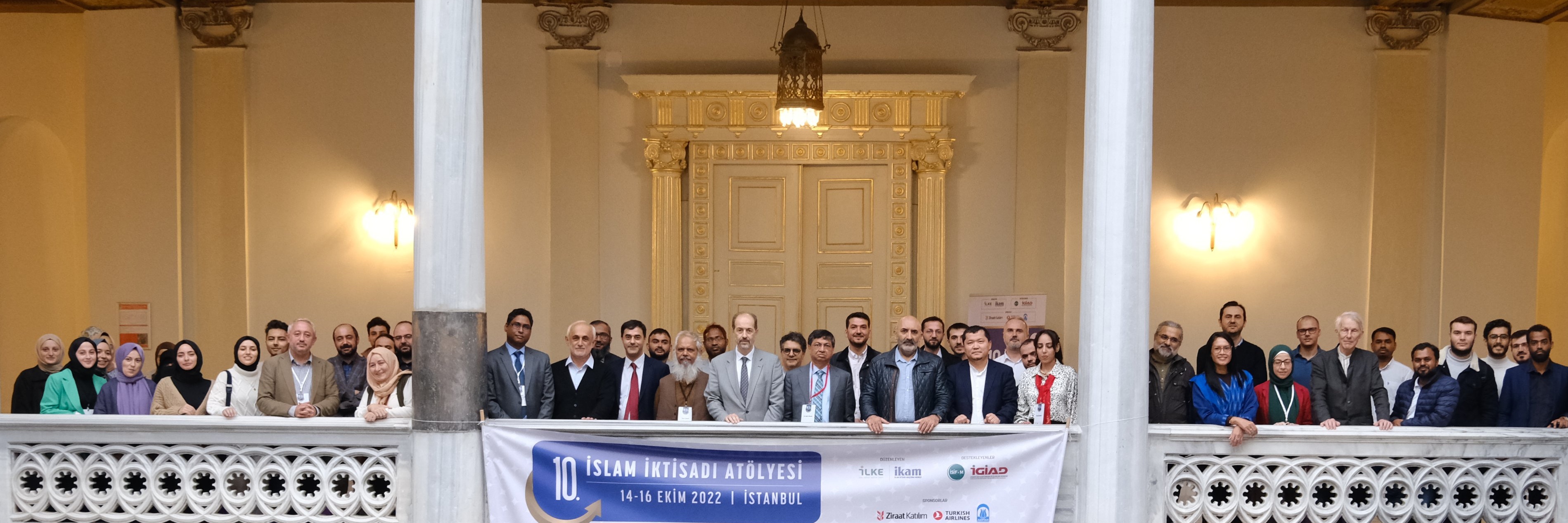
The 10th Islamic Economics Workshop by ILKE Foundation’s Research Center for Islamic Economics (IKAM) concluded at Istanbul University this Sunday, October 16, 2022. The 3-day long workshop received rich participation from academicians and professionals from the field of Islamic Economics who had come from different parts of the world. On the opening day of the workshop, the Islamic Economic Award Ceremony was held, followed by a panel discussion framed around the topic of “Promises of Islamic Economics in The Era of Crisis.” Besides the opening day, the workshop comprised six sessions that were held on Saturday and Sunday, October 15 and 16, respectively.

Prof. Dr. Lutfi Sunar, Chairman of ILKE Foundation’s Board of Executives, emphasized the fact that the workshop has been organized for 10 consecutive years and has always attracted international physical participation except for the year when the pandemic forced it to be organized in a hybrid manner. Sunar also pointed out that solutions must be sought from within the current system for the crises that humanity is passing through; however, it is not easy to find a solution within the system. Emphasizing the significance of the workshop, he said, “It seems that it is not easy to find a solution within the current system. In this sense, we are actually in a very important place for discussing alternative proposals.”

General Manager of Ziraat Bank Metin Özdemir expressed that the atmosphere we are passing through is suitable for the discussion of the subject of the workshop, and also declared that he will follow the sessions as much as possible and will read the works presented.

Speaking after Özdemir, Istanbul University Vice Rector Prof. Dr. Haluk Alkan stated that “If you have a claim, if you have a claim or a suggestion for bringing justice to the world, these crises are also creating new opportunities for you.”

Ayhan Karahan, Chairman of the Board of Executives at İGİAD, said that the field of Islamic economics is inspiring new progress in Türkiye and stated that bachelor, graduate, and doctoral programs have been opened in many universities.

Chairman of the Organizing Committee of the 10th Islamic Economics Workshop, Prof. Dr. Necmettin Kızılkaya, said that they decided on the title of the workshop right after the previous workshop. He mentioned that crises are increasing in the world with every passing day. Kızılkaya also said that Islamic Economics can play a pivotal role in moving from these crises.


Workshop Sessions

After the opening ceremony, participants who had come from different countries got the opportunity to make their presentations during the sessions, which were held on 15 and 16 October.

The sessions were chaired by leading names, including Mehmet Saraç, Mehmet Babacan, Necmettin Kızılkaya, Zeynep Hafsa Orhan, Hasan Vergil, and Taha Eğri. In the workshop sessions, which continued for two days, 10 academicians discussed new opportunities for creating alternatives in the context of the crises and Islamic Economics in their presentations.

At the end of the workshop sessions, the final declaration entitled “Islamic Economics proposed the Ways Out of The Economic Crises” was published.


Related Contents

The Economy of Aid in Türkiye: A Model Proposal for Ecosystem

In today's world, social, economic, and ecological dynamics are becoming increasingly sophisticate day by day. Natural disasters and crises, especially after Cold War, have triggered a significant global surge in humanitarian needs over the past three decades. This has led to the emergence of an  economy of aid aimed at tackling this challenging scenario. However, it's evident that the  economy of aid, comprising contributions from international organizations, governments, NGOs, corporations, and individuals, currently lacks in both quality and quantity.Türkiye, on the other hand, has developed a distinctive aid ecosystem over the years, particularly since the 2010s, drawing from its rich charitable heritage inherited from the Ottoman era. Consequently, Türkiye has established a notable economy of aid, both domestically and internationally.  This policy brief addresses the aid economy in Türkiye. It also aims to identify Türkiye's position in the global aid economy, examine the evolution of the balance between state and civil society in Turkey, and propose a model for a more sustainable aid ecosystem.

İLKE Foundation's Research Center for Islamic Economics Organized the 11th Islamic Economics Workshop!

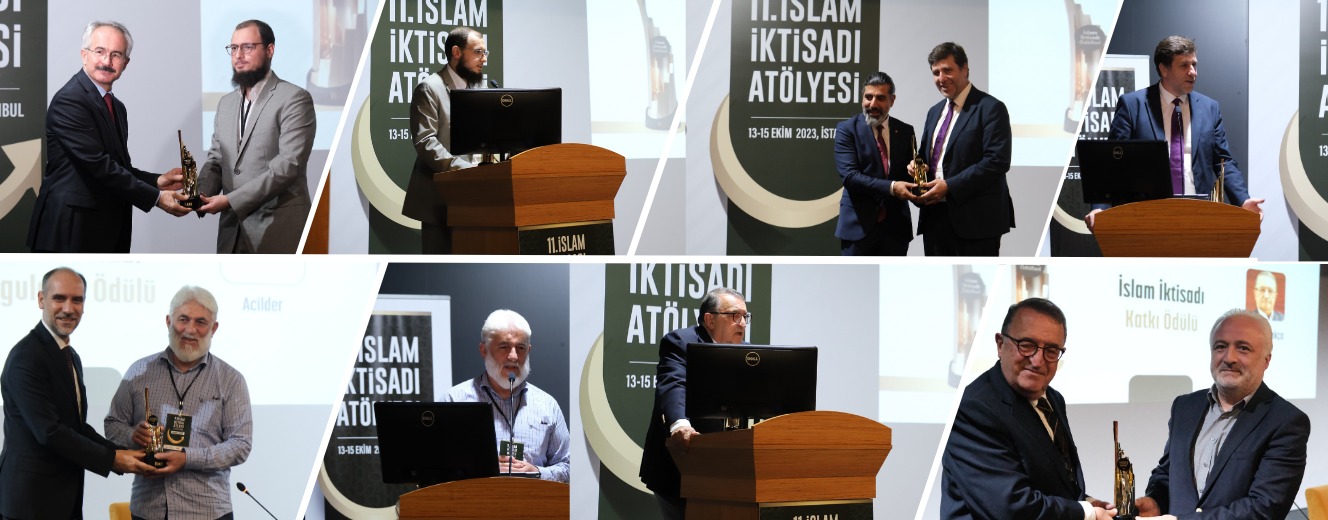
11th Islamic Economics Workshop," organized by the Research Center for Islamic Economics under the umbrella of the İLKE Foundation, has achieved its objectives. This annual workshop, dedicated to providing human-centered solutions to challenges, gathers distinguished researchers in the field. The theme of  this year was "Islamic Economics and the Environment," aiming to explore innovative approaches at the confluence of Islamic economics and environmental considerations. Islamic finance has significant potential in the realms of development and the environment.  Mustafa Afşin Sancar, Director of the Center for Islamic Economics Research (İKAM), emphasized the increasing importance of environmental issues in our agenda.  Sancar also emphasized prevalent issues, including income inequality and the overconsumption of resources.He stated, "We see different paradigms, different possibilities with Islamic economics. We will discuss what these possibilities are and how they can be implemented. Islamic finance has substantial potential to contribute to development and environmental issues." Suat Tüccar, Head of Product Management and Digital Banking Group in Ziraat Participation Bank, emphasized that the academic studies in the field of Islamic economics have a clear impact on the sector, with participation banks (Islamic Bank) standing out as the most significant concrete result of these endeavors. In concluding his discourse, he underscored the imperative for symbiotic collaboration between the academic research in Islamic economics and the industry. Emphasizing the reciprocal benefits that could be derived from such collaboration, he highlighted the pivotal role that cooperation between these domains plays in fostering a more robust and comprehensive understanding of Islamic economic principles.  Call for Practical and Realistic Solutions Lütfi Sunar, Chairman of the ILKE Foundation, expressed his hope that Islamic economics would offer realistic and implementable solutions related to the environment, emphasizing its potential to address environmental issues. In addressing environmental concerns, Ayhan Karahan, IGIAD President,  emphasized our responsibility to leave an undisturbed world for future generations, without causing harm to the environment. He highlighted that in this regard, the Islam provides humanity with vital ideas and concepts related to justice, balance, and moderation. Islamic Economics Implementation AwardIn the year 2023, the Emergency Aid Volunteers Association (ACİLDER) was honored with the Islamic Economics Implementation Award.  This association, committed to the distribution of essential items required by numerous families daily under the motto "Do Not Waste, Spend in Charity," has been proactively aligned with the "Zero Waste" objective, which has garnered increased attention in recent times. Within the framework of the Islamic Economics Awards, the "Islamic Economics Research Award" was presented to Prof. Dr. Ahmet Faruk Aysan for his significant contributions through important research in the field. Dr. Ozan Maraşlı received the "Islamic Economics Thesis Award" for his doctoral thesis titled "The Economics of Awqaf in Turkey." Lastly, Murat Çizakça, who has contributed to the field with over 200 works, was honored with the "Contribution to Islamic Economics Award."  As part of the kickoff for the 11th Islamic Economics Workshop, we hosted a panel discussion titled "The Role of Islamic Economics and Finance in the Face of Environmental Crises." Led by Prof. Dr. Necmettin Kızılkaya from Istanbul University, the panel featured insightful contributions from Ömer Emeç, Deputy General Manager of Albaraka Türk, and Prof. Dr. Ahmet Faruk Aysan, a faculty member at Hamad bin Khalifa University in Qatar. Throughout the engaging two-day workshop, researchers from various corners of the globe presented their unique perspectives.