

Logo
9th Islamic Economics Workshop Organized

9th Islamic Economics Workshop Organized

Category: News History: 22 September 2021

The 9th Islamic Economics Workshop was organized under auspices of IKAM on 17-19 September 2021 at Istanbul Ticaret University.

IKAM encourages the production of competent ideas and theories for the construction of the idea of "Islamic economics" in a comprehensive way through research, education, and publication activities. Islamic economics workshops represent a series of programs that can be considered as concrete examples of IKAM's contributions to the field of Islamic economics and finance. With the 9th workshop organized this year, IKAM also sets out an example of consistent effort, determines a concept every year in the workshop series, and in this context, it prepares an environment and opportunity for competent researchers to discuss the subject in depth with different angles. In this long journey that started with the theme of "Basic Concepts and Ideas" in 2013, the issues of "Islamic Economics and the Market, Islamic Economics and Labor, Social Justice from the Perspective of Islamic Economics, Interest from the Perspective of Islamic Economics, Islamic Economics Methodology, Money in Islamic Economics, Institutions in Islamic Economics" have been brought to the agenda respectively. While choosing the topics, the current practices, and contribution to the theoretical background of the relevant field are considered.

The COVID-19 epidemic, which we continue to experience in these days, has been a global epidemic that human history has not experienced before. One of the key concepts that come up when discussing the economic dimension of this epidemic, whose effects are evaluated in various contexts, is undoubtedly Islamic economics. It can be said that Islamic economics provides a key to overtake the economic crisis caused by the epidemic, so the process we are going through is an opportunity for Islamic economics studies.

The concept of development has become an important status and focus point for many statesmen and economists since the World War II. The concept of development and growth are progressing together and support each other. The historical background of this togetherness is laid out in the inauguration speech of US President Truman in 1949. Truman has positioned many countries as developed or underdeveloped by using the concept of “developing countries” and therefore the level of international development and growth has become accepted by many countries and authorities. Although these conceptualizations are inaccurate and given in many aspects, the differences in development levels between countries in the international economic system has brought different approaches such as centre-periphery, developed-developing, or dependent countries and led to various definitions. The problems and obstacles that formerly colonized countries have experienced in development and to implement stable development policies constitute the most important agenda of the “Problems of Economic Growth and Development”. Countries grouped under the name of developing countries and having the development performances of low-income countries are at the lower levels are transformed into a global level problem when combining with various issues in these countries. Many migration waves from rural to urban areas or, from underdeveloped regions to developed regions, again constitute important problem areas in terms of their socio-economic consequences. It is certain that economic problems such as slow growth, low-rate development, and endless poverty that includes a significant part of Muslim countries, will also turn into the most important internal problem mechanisms in the coming years unless structural and permanent solutions are discussed and provided.

IKAM is aware of this need and has determined the theme of the 9th Islamic Economics Workshop as "The Problems of Economic Growth and Development”. During the workshop, problems of Economic Growth and Development were discussed from a broad perspective. Esteemed scholars from various parts of the world had the opportunity to present their works and the problems of economic growth and development were opened to discussion from different perspectives.

The opening session of the workshop was held on 17 September 2021 at Istanbul Commerce University. İKAM Director Dr. Sercan Karadoğan, Chairman of İGİAD Ayhan Karahan, Chairman of İLKE Prof. Dr. Lütfi Sunar, Chairman of the Board of Trustees of İLKE Prof. Dr. Nihat Erdoğmuş, Rector of Istanbul Commerce University Prof. Dr. Yücel Oğurlu and Vice President of Istanbul Chamber of Commerce İsrafil Kuralay made their welcome speeches. After the welcome speeches, the program continued with the presentation of the 2021 Islamic Economics Awards. After the award presentation, the inaugural panel titled "approaches and proposed solutions to the problem of development and underdevelopment" was held. Mabid Ali Al Jarhi, the winner of the 2021 Islamic Economics Research Award, Tarık Akın, Head of the Participation Department of the Presidential Finance Office, Turkey, Azmi Omar, president of INCEIF, and Ahmet Faruk Aysan from Qatar Hamad bin Khalifa University delivered their speeches at the panel.

Related Contents

İLKE Foundation's Research Center for Islamic Economics Organized the 11th Islamic Economics Workshop!

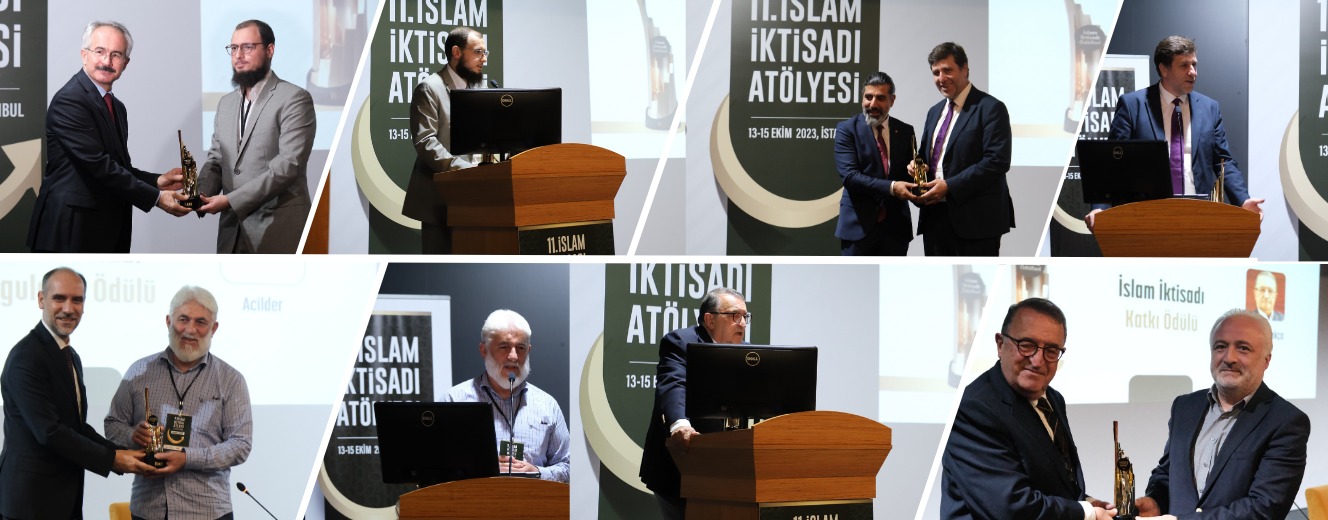
11th Islamic Economics Workshop," organized by the Research Center for Islamic Economics under the umbrella of the İLKE Foundation, has achieved its objectives. This annual workshop, dedicated to providing human-centered solutions to challenges, gathers distinguished researchers in the field. The theme of  this year was "Islamic Economics and the Environment," aiming to explore innovative approaches at the confluence of Islamic economics and environmental considerations. Islamic finance has significant potential in the realms of development and the environment.  Mustafa Afşin Sancar, Director of the Center for Islamic Economics Research (İKAM), emphasized the increasing importance of environmental issues in our agenda.  Sancar also emphasized prevalent issues, including income inequality and the overconsumption of resources.He stated, "We see different paradigms, different possibilities with Islamic economics. We will discuss what these possibilities are and how they can be implemented. Islamic finance has substantial potential to contribute to development and environmental issues." Suat Tüccar, Head of Product Management and Digital Banking Group in Ziraat Participation Bank, emphasized that the academic studies in the field of Islamic economics have a clear impact on the sector, with participation banks (Islamic Bank) standing out as the most significant concrete result of these endeavors. In concluding his discourse, he underscored the imperative for symbiotic collaboration between the academic research in Islamic economics and the industry. Emphasizing the reciprocal benefits that could be derived from such collaboration, he highlighted the pivotal role that cooperation between these domains plays in fostering a more robust and comprehensive understanding of Islamic economic principles.  Call for Practical and Realistic Solutions Lütfi Sunar, Chairman of the ILKE Foundation, expressed his hope that Islamic economics would offer realistic and implementable solutions related to the environment, emphasizing its potential to address environmental issues. In addressing environmental concerns, Ayhan Karahan, IGIAD President,  emphasized our responsibility to leave an undisturbed world for future generations, without causing harm to the environment. He highlighted that in this regard, the Islam provides humanity with vital ideas and concepts related to justice, balance, and moderation. Islamic Economics Implementation AwardIn the year 2023, the Emergency Aid Volunteers Association (ACİLDER) was honored with the Islamic Economics Implementation Award.  This association, committed to the distribution of essential items required by numerous families daily under the motto "Do Not Waste, Spend in Charity," has been proactively aligned with the "Zero Waste" objective, which has garnered increased attention in recent times. Within the framework of the Islamic Economics Awards, the "Islamic Economics Research Award" was presented to Prof. Dr. Ahmet Faruk Aysan for his significant contributions through important research in the field. Dr. Ozan Maraşlı received the "Islamic Economics Thesis Award" for his doctoral thesis titled "The Economics of Awqaf in Turkey." Lastly, Murat Çizakça, who has contributed to the field with over 200 works, was honored with the "Contribution to Islamic Economics Award."  As part of the kickoff for the 11th Islamic Economics Workshop, we hosted a panel discussion titled "The Role of Islamic Economics and Finance in the Face of Environmental Crises." Led by Prof. Dr. Necmettin Kızılkaya from Istanbul University, the panel featured insightful contributions from Ömer Emeç, Deputy General Manager of Albaraka Türk, and Prof. Dr. Ahmet Faruk Aysan, a faculty member at Hamad bin Khalifa University in Qatar. Throughout the engaging two-day workshop, researchers from various corners of the globe presented their unique perspectives.