

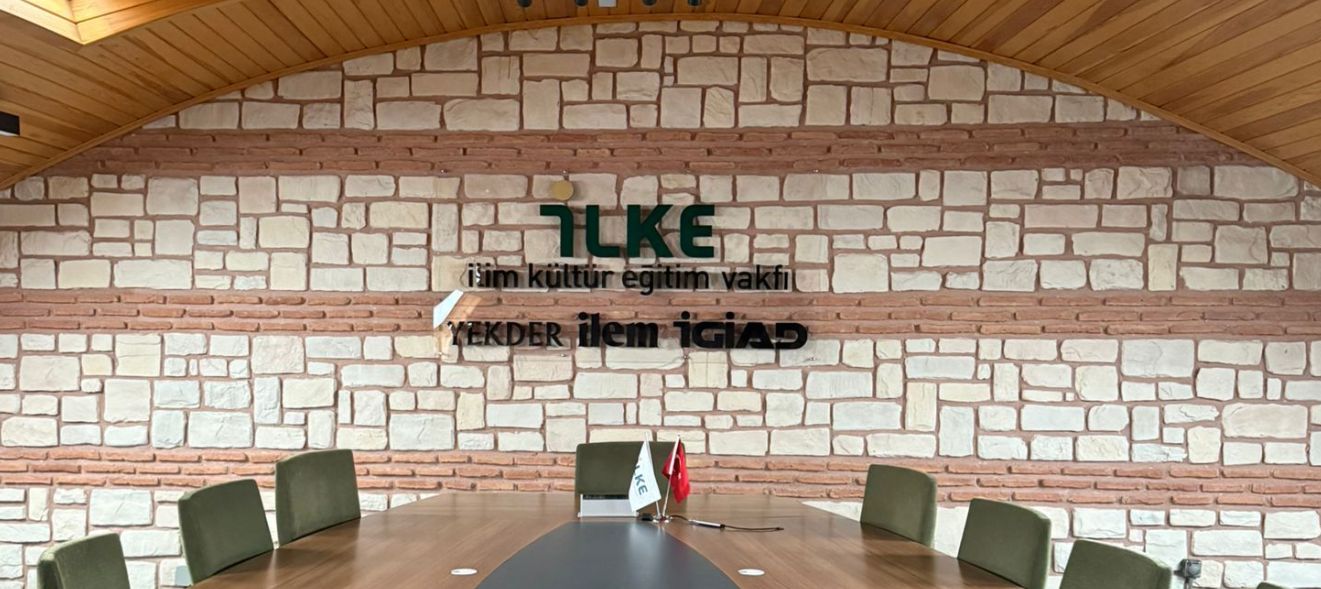
"The Spirit of Space in Education: Identity, Personality, and Belonging" Seminar Held
In the seminar organized by the ILKE Foundation Research Center for Education Policy (EPAM) at the Fatih Sahn-ı Semân Madrasa, the importance of space in the educational process was addressed in a multidimensional manner.
At the event moderated by the EPAM Director Assoc. Prof. Dr. Ayhan Öz, Assoc. Prof. Dr. Yusuf Civelek, a faculty member at the FSMVÜ Faculty of Art, Design and Architecture, stated that schools should establish strong, organic ties with the neighborhoods they are located in and that the physical environmental design should be planned as a whole. He emphasized that designing spaces in an aesthetic and functional way that stimulates the five basic senses plays a critical role in the construction of identity and personality. He pointed out that designs of educational spaces that consider psycho-social needs strengthen students' cognitive flexibility, sense of belonging, and social connectedness.
Civelek noted that the fact that school architecture in Türkiye is mostly limited to monotonous reinforced concrete structures not only reduces students' motivation but also leads to a weakening of identity and belonging. Furthermore, he emphasized the necessity of designing school spaces as areas that meet spiritual and cultural needs as much as functional ones in ensuring equal opportunity in education and social justice.
The seminar also highlighted the importance of spaces that meet children's needs for physical movement. In addition, it was stated that spatial design should support children's creativity and emotional development by triggering aesthetic feelings. It was also emphasized that educational spaces should support children's psychology with warm and reassuring designs.
In the program, where the transformative effects of physical environmental design on the individual and society were discussed, it was emphasized that urban planning activities should be carried out with a holistic approach that considers all elements of the city, in line with principles that prioritize human and social welfare. The importance of conducting this process with long-term and sustainable planning, avoiding hasty decisions, was expressed. Additionally, it was stated that aesthetics in zoning activities should be delivered equally and fairly to all segments of society without class distinction.
Recommendations:
- The School-Neighborhood Connection Should Be Strengthened: Educational spaces should be designed to establish an organic bond with the social and cultural fabric of their surroundings; thus, students' sense of belonging and social identity development should be supported.
- Visual Culture and Aesthetic Values Should Be Placed at the Center of Education Policies: Spatial designs should be shaped with aesthetic elements that will nurture societal cultural memory and personality development.
- Space Should Address Psycho-Social Needs: Designs that are not only functional but also offer a variety of stimuli and support students' cognitive flexibility and spiritual development should be preferred.
- Accessible and High-Quality Educational Spaces Should Be Expanded: Easily accessible educational areas suitable for children's developmental needs should be created in every region of the country, and equal opportunity should be observed.
- Collaboration Between Education and Architecture Should Be Increased: Education policies and pedagogical goals should be integrated into architectural design processes; thus, spatial aesthetics and cultural values should become an integral part of educational environments.